

LLC Members vs. Managers in Florida 2026: Roles, Responsibilities & Differences
When you start an LLC in Florida, one of the most important decisions you’ll make is choosing between a member-managed or manager-managed structure.
Many business owners are confused about the difference between LLC members and managers, and even more confused about whether their LLC actually needs a manager at all.
The good news: understanding these roles is straightforward once you know what you’re looking at.
In this guide, we’ll break down exactly who LLC members vs managers are, how their roles differ under Florida law, and how to structure your LLC to match your business needs.
What are LLC Members vs. LLC Managers?
LLC Member: A member is an owner of the limited liability company. Think of a member as a shareholder in a corporation, except that LLC members have more flexibility in how they participate in the business. Members contribute capital, share in profits and losses, and have voting rights on major company decisions. The number and identity of members is typically shown in your operating agreement, not necessarily in your public Articles of Organization.
LLC Manager: A manager is a person (or entity) designated by the members to handle the day-to-day operations and decision-making authority of the LLC. A manager may be a member of the LLC, or they may be a third party hired specifically to run the business. Under Florida law, a manager is the person authorized to manage and control the LLC’s business. They’re the ones with the power to sign contracts, open bank accounts, hire employees, and make operational decisions on behalf of the company.
Key difference: Membership = ownership; management = decision-making authority. These can be the same person or completely different people.
Under Florida law, a member is the equivalent of an owner, and a manager is a person designated by the members of a manager-managed LLC to perform the management functions on behalf of the company. The manager may or may not be a member of the LLC. Florida Department of State
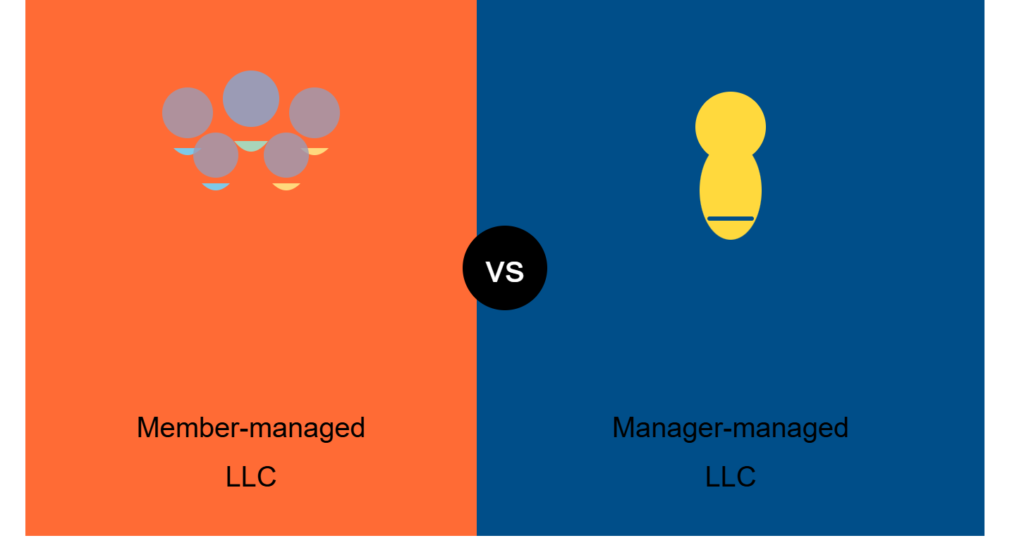
Member-Managed vs. Manager-Managed: How Florida LLCs Work
Florida gives you two choices when forming an LLC. You can operate as member-managed or manager-managed. Here’s the key difference:
Member-Managed LLC: All members share the right to participate in managing the company. Each member can make decisions, bind the LLC to contracts, and act on the company’s behalf. This structure works best for small businesses where all owners want to be involved in daily operations.
Manager-Managed LLC: One or more managers are designated to handle all management responsibilities. Members step back from day-to-day operations and focus on their role as investors or strategic advisors. Managers have the exclusive right to make decisions and bind the LLC.
Comparison Table: Member-Managed vs. Manager-Managed LLC
| Factor | Member-Managed | Manager-Managed |
|---|---|---|
| Who decides? | All members equally | Designated manager(s) |
| Member involvement | Hands-on, daily decisions | Passive investors (typically) |
| Manager needed? | No | Yes |
| Manager can be non-member? | N/A | Yes |
| Decision speed | Slower (needs member consensus) | Faster (manager decides) |
| Investor appeal | Lower (requires member involvement) | Higher (passive investment available) |
| Structure complexity | Simple | More formal |
| Cost | Lower (no manager salary typically) | Higher (may need to pay manager) |
| Liability exposure | All members liable for decisions | Managers liable for decisions |
A Note on “Managing Member” Confusion
You may have heard the term “managing member.” This term is no longer used in Florida law under the Revised LLC Act (effective January 1, 2015). If your LLC documents use this term, know that the term “managing member” is no longer operative under the Revised Act, and by default, all LLCs will be member-managed unless specific terms of art are used which dictate a clear intent to be manager-managed. If you have an older LLC with “managing member” language, it’s classified as member-managed, not a separate category.
Roles, Responsibilities & Fiduciary Duties in Florida LLCs
Who does what depends on whether your LLC is member-managed or manager-managed. Here’s what each role entails:
Member Responsibilities in a Member-Managed LLC
In a member-managed LLC, all members have equal authority to manage the business unless your operating agreement states otherwise. This means members are responsible for:
- Making business decisions: Entering into contracts, hiring employees, opening bank accounts, purchasing assets
- Attending meetings: Participating in member meetings and voting on major decisions
- Contributing to operations: Being involved in the day-to-day running of the business
- Following fiduciary duties: Members owe duties of care and loyalty to the LLC and other members (discussed below)
Each member’s voting power is proportionate to their ownership stake in the LLC, unless the operating agreement provides otherwise.
Manager Responsibilities in a Manager-Managed LLC
In a manager-managed LLC, managers have exclusive authority to manage the business. Members do not have management authority unless the operating agreement specifically grants it. Managers are responsible for:
- Daily operations: Running the business, making operational decisions, managing employees
- Binding the LLC: Signing contracts, opening accounts, making purchases on behalf of the company
- Reporting to members: Keeping members informed about business performance and major decisions
- Following fiduciary duties: Managers owe the same fiduciary duties to the LLC and members as managers in any business entity
Importantly, managers hold a fiduciary duty towards the LLC, which are specifically outlined in the operating agreement. UpCounsel
Fiduciary Duties: LLC Members vs. Managers
Both members (in member-managed LLCs) and managers (in manager-managed LLCs) owe fiduciary duties to the LLC and its other members. Under Florida Statute § 605.0409, these duties include:
Duty of Care: The person must discharge their duties in good faith, with the care an ordinary prudent person would exercise under similar circumstances, and in a manner the person reasonably believes to be in the best interests of the LLC. Under Florida law, willful or intentional misconduct cannot be eliminated from this duty.
Duty of Loyalty: The person must account to the LLC and members for any property, profit, or benefit they receive from the LLC. They cannot engage in self-dealing or usurp business opportunities that belong to the LLC.
Duty of Good Faith & Fair Dealing: All parties must act honestly and in accordance with any reasonable expectations of the other members.
The operating agreement can modify these duties (with some limits). For example, you can increase or limit the duty of care, but you cannot eliminate duties related to bad faith, willful or intentional misconduct, or knowing violations of law.
How to Choose Member-Managed vs. Manager-Managed: Decision Framework
Choosing the right structure depends on your business situation, ownership structure, and how you want to operate. Here’s how to think through it:
When to Use Member-Managed LLC
Member-managed works best if:
- You’re a solo owner: A single-member LLC is naturally member-managed
- You have 2-3 co-owners: All want to be involved in the business
- You’re running a tight operation: Don’t need a professional manager
- Cost is a priority: You want to avoid paying manager salaries
- All owners are hands-on: No one is purely an investor
Example: Two friends start a consulting firm together. Both want to be involved in client decisions, hiring, and operations. Member-managed makes sense.
When to Use Manager-Managed LLC
Manager-managed works best if:
- You have multiple members: Some want to be involved, others want to be passive investors
- You need outside investors: Passive investors prefer a manager-managed structure where they don’t have liability or decision-making burdens
- One person will run operations: While others focus on capital/strategy
- You need centralized decision-making: Faster decisions without needing member consensus
- You want to hire professional management: Bring in an experienced manager to run operations while you focus on growth
Example: A real estate investment group has five members. Three are passive investors. Two are active. Manager-managed structure allows the two active members (or an outside manager) to make decisions without needing approval from the three passive investors.
How to Document Your Choice
Your choice between member-managed and manager-managed is documented in two places:
- Articles of Organization (filed with Florida): You list the person(s) authorized to manage the company. If member-managed, list all members or the primary manager(s). If manager-managed, list only the managers.
- Operating Agreement (internal document): Your operating agreement spells out in detail who has management authority, what decisions they can make alone vs. which need member approval, and how managers are selected/removed.
Important: Don’t confuse these documents. The Articles tell the state who’s authorized to manage. The operating agreement tells members and managers the details of how management actually works.
Can You Have Both Members and Managers in the Same LLC?
Yes, absolutely. Many LLCs use a mixed structure where some members manage and some don’t. For example:
- Structure: Two members, one is also the manager. The other is a passive investor.
- Result: The managing member makes day-to-day decisions. The passive investor owns a stake but doesn’t participate in management.
In this scenario, you would file the managing member’s name with the state (in the Articles of Organization) and detail both roles in the operating agreement: Member A is both a member (owner) and manager (decision-maker); Member B is a member (owner) only.
This mixed structure is flexible and common in practice. The key is documenting the roles clearly in your operating agreement so there’s no confusion later.
Common Mistakes That Create Liability Exposure
Many LLC owners make mistakes when setting up member and manager roles. These mistakes can expose you to unnecessary liability and disputes. Here are the most common ones:
Mistake 1: Unclear Operating Agreement A vague operating agreement that doesn’t spell out who has management authority leads to disputes when members disagree on decisions. If a member without authority signs a contract, is the LLC bound? It depends on what your agreement says—and if it’s unclear, you lose. An experienced Florida business attorney can ensure your operating agreement is clear and comprehensive.
Mistake 2: Confusing Members with Managers in the Articles The Articles of Organization should list the people authorized to manage your LLC. Many owners list all members, even passive investors. This creates the impression (legally and practically) that everyone has management authority. Document this correctly from the start.
Mistake 3: Forgetting the Operating Agreement You file Articles with the state, but the real management structure lives in your operating agreement. If you don’t have a detailed operating agreement, you’re relying on default Florida law—which may not match your actual intentions. Many LLC disputes arise because the operating agreement was too vague or missing entirely.
Mistake 4: Not Addressing Member or Manager Removal What happens if a manager needs to be removed? Or if a member wants to exit? These situations are common but often overlooked in the operating agreement. Without clear removal procedures, you face disputes and potential deadlock.
Mistake 5: Ignoring Fiduciary Duties Managers and members owe fiduciary duties to the LLC and each other. Violating these duties (self-dealing, usurping business opportunities, acting in bad faith) can lead to litigation. An experienced Florida business attorney can help you structure transactions properly to avoid fiduciary duty violations and protect your interests.
When to Contact an Attorney About LLC Member and Manager Structure
You should seek legal guidance if you’re facing any of these situations:
You’re forming an LLC and unsure about structure. Before filing your Articles and drafting your operating agreement, talk to an attorney about whether member-managed or manager-managed fits your business.
You have multiple members with different levels of involvement. Passive investors require different protections and structures than active operators. An attorney can design the right framework.
You’re bringing in new investors or members. This is the time to revisit your management structure and ensure it matches your ownership and capital situation.
You’re experiencing disputes between members over decision-making. A vague operating agreement often leads to conflict. An attorney can mediate and clarify roles.
You’re considering changes to your management structure. Converting from member-managed to manager-managed (or vice versa) requires operating agreement amendments and sometimes Articles amendments.
You’re concerned about liability exposure. Managers and members owe fiduciary duties. An attorney can help you understand your duties and structure transactions to minimize exposure.
If you’re unsure about your current LLC’s management structure or need to make changes, our firm can help you understand your obligations and ensure your LLC is properly structured to protect your interests.
Ready to Structure Your LLC Properly?
Getting the LLC members vs. managers decision wrong can lead to disputes, liability exposure, and operational chaos down the road.
If you’re forming an LLC, restructuring an existing LLC, bringing in new members, or unsure whether your current structure matches your business needs, our experienced Florida business attorneys can help. We’ll review your specific situation, explain your LLC members vs. managers options in plain English, and help you choose the structure that protects your interests and supports your business goals.

This article is provided for informational purposes only and does not constitute legal advice. The information contained herein is based on Florida law as of the publication date and may not reflect recent changes. Laws vary by jurisdiction and circumstance, and no single article can address every situation. Do not rely on this article as a substitute for professional legal counsel. If you face a legal matter related to the topics discussed, contact an attorney licensed in Florida to review your specific facts and circumstances. Southron Firm, P.A., is a Florida law firm based in Tampa. For a consultation regarding your business law matter, contact our office.
FAQ
Can an LLC manager be a non-member? A: Yes. In a manager-managed LLC, the manager can be a member of the LLC, or they can be a completely separate person or entity hired to run the business. This flexibility is one of the key advantages of manager-managed LLCs—you can bring in professional management without making that person an owner.
Do I need a manager for my LLC? A: Only if you choose manager-managed structure. If you form a member-managed LLC (the default in Florida), you don’t need a separate manager—all members share management authority. Choose manager-managed only if it makes sense for your ownership structure and business needs.
What are the voting rights of LLC members? A: In a member-managed LLC, each member’s voting power is proportionate to their ownership stake (percentage interest in profits), unless the operating agreement provides otherwise. In a manager-managed LLC, voting rights may be different—it depends on your operating agreement. Some manager-managed LLCs give all members equal votes regardless of ownership stake.
Can a member be removed from an LLC? A: Yes, but the process depends on your operating agreement and Florida law. Some operating agreements allow removal by majority vote. Others require unanimous consent. An attorney can help you understand your options and the proper removal process.
Can an LLC manager make all decisions without member approval? A: That depends on your operating agreement. Typically, managers can make day-to-day operational decisions alone (hiring, contracts, routine business). Major decisions (dissolving the LLC, selling the business, amending the operating agreement) usually require member approval. Your operating agreement should spell this out clearly.
What happens if a manager breaches their fiduciary duty? A: Members can sue the manager for damages. If the manager self-deals or usurps a business opportunity, members can seek to recoup those profits. In severe cases, members can petition to remove the manager or dissolve the LLC. Fiduciary duty violations are serious and expensive to litigate.
How do I change my LLC from member-managed to manager-managed? A: You need to amend your operating agreement and file an amended Articles of Organization with Florida’s Division of Corporations. The amendment changes the person(s) authorized to manage your LLC and formally designates manager-managed status. An attorney can help you draft and file these amendments.
Can members and managers have different profit-sharing percentages? A: Yes. Your operating agreement can specify that ownership percentages (which determine profit shares and voting power) are different from management authority. For example, Member A could own 60% but not have management authority, while Member B owns 40% and is the designated manager. This is common in passive investor structures.
Key Takeaways
- Members are owners; managers are decision-makers. These roles can overlap or be completely separate depending on your structure.
- Florida defaults to member-managed unless stated otherwise. If you don’t specify manager-managed in your Articles and operating agreement, your LLC is member-managed.
- Member-managed works for small businesses with hands-on owners. Manager-managed works when you have passive investors or need professional management.
- Document your structure in both the Articles of Organization and operating agreement. The Articles tell the state who’s authorized to manage; the operating agreement details how management actually works.
- Both members and managers owe fiduciary duties to the LLC and each other. These duties include care, loyalty, and good faith. Violating them can lead to liability and litigation.
- Your operating agreement is critical. A vague or missing operating agreement creates disputes and exposes you to unnecessary liability.
- Consider your business needs, ownership structure, and investor involvement when choosing. There’s no one-size-fits-all answer—the right structure depends on your specific situation.
- An experienced Florida business attorney can help you structure your LLC properly and avoid common mistakes. The cost of good documentation upfront is far less than the cost of disputes and liability later.